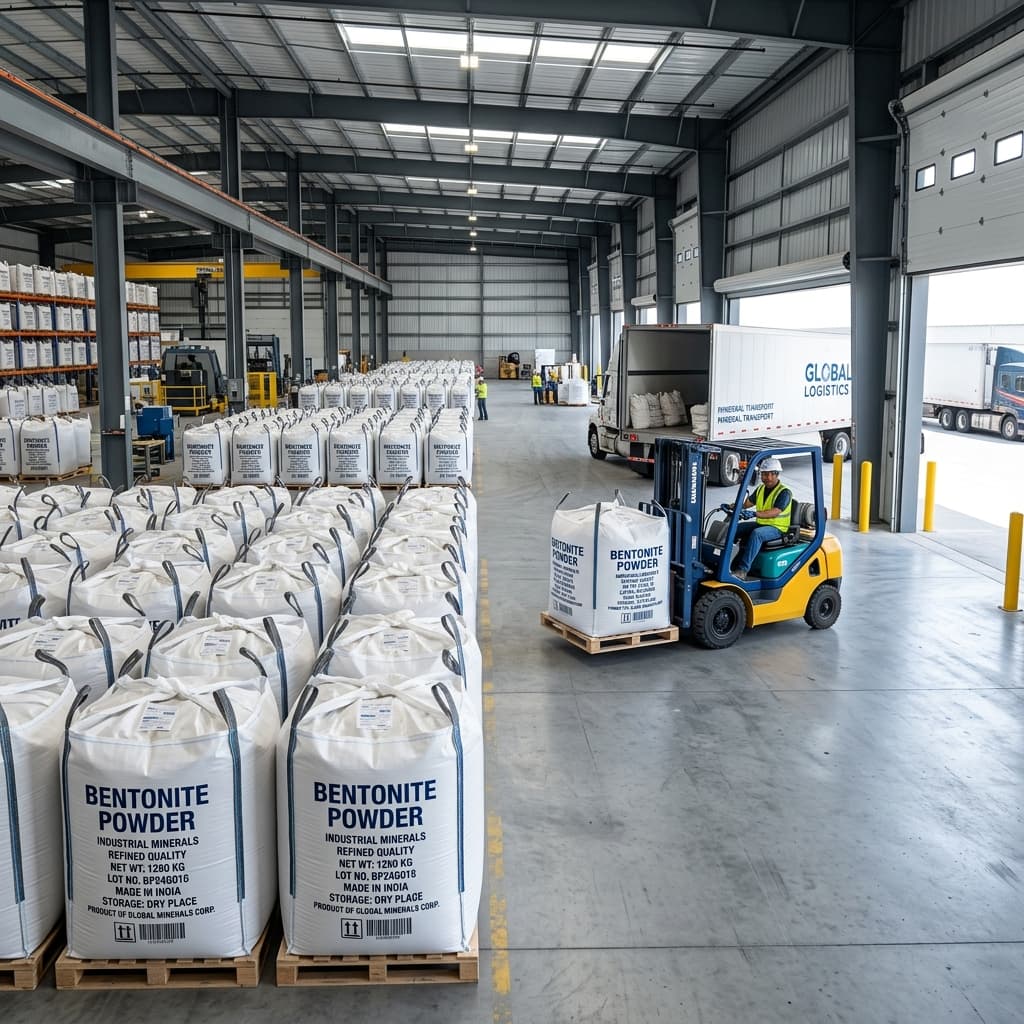
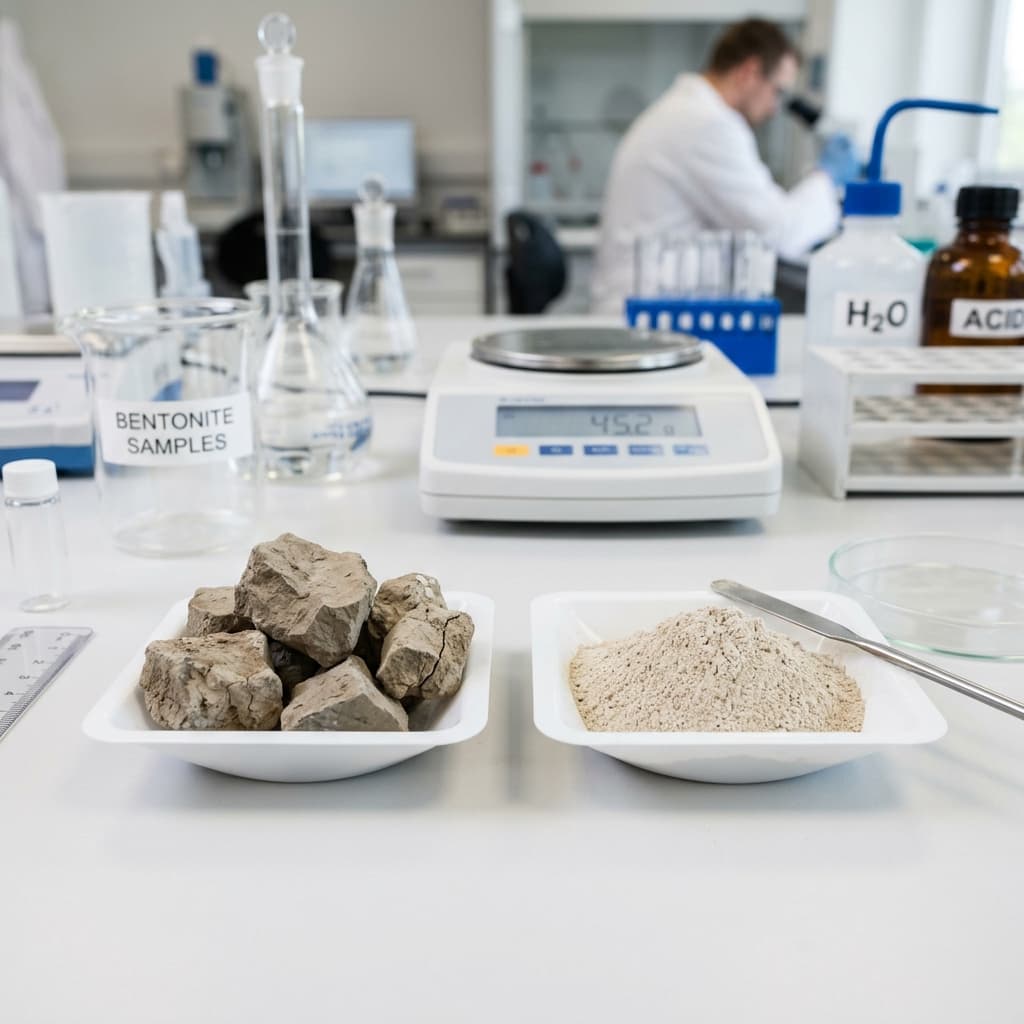
Bentonite clay is one of the most versatile and widely utilized industrial minerals on earth. Known as the "clay of a thousand uses," its unique molecular structure gives it extraordinary physical and chemical properties, including high swelling capacity, excellent viscosity, binding strength, and absorption capabilities.
From deep-sea oil drilling wells to civil engineering piling, metal casting foundries, and agricultural soil improvement, this geological wonder plays an indispensable role in modern industrial manufacturing.
In this comprehensive guide, we will explore the science behind what makes bentonite clay so unique, its primary types, and how its diverse applications power modern industry.
What Is Bentonite Clay? The Mineralogical Science
Bentonite is an absorbent aluminum phyllosilicate clay consisting primarily of the mineral montmorillonite. Montmorillonite belongs to the smectite clay group, which consists of a 2:1 expanding crystal lattice structure.
This 2:1 structure consists of two outer silica tetrahedral sheets sandwiching one inner alumina octahedral sheet. This molecular layout is crucial because:
- Isomorphous Substitution: During geologic formation, some of the aluminum (Al³⁺) ions in the octahedral layer are replaced by magnesium (Mg²⁺) or iron (Fe²⁺) ions of lower valence. This creates a net negative charge on the clay crystal sheets.
- Interlayer Cations: To balance this negative charge, cations like sodium (Na⁺) or calcium (Ca²⁺) are attracted to the space between the structural sheets (the interlayer zone).
- Water Absorption: When water enters this interlayer space, the clay sheets separate, allowing the mineral to swell and form highly viscous suspensions.
Because of this unique chemical configuration, bentonite clay can absorb huge volumes of water and expand to many times its dry volume.
Sodium Bentonite vs. Calcium Bentonite: The Two Primary Types
Based on the dominant balancing cation in the interlayer space, natural bentonite is classified into two major categories, each with distinct industrial properties:
1. Sodium Bentonite (High Swelling)
Sodium bentonite features sodium (Na⁺) as the primary exchangeable cation.
- Swelling Capacity: Extremely high. It can absorb water up to 15 to 20 times its dry volume.
- Gelation: When dispersed in water, it forms a stable, highly viscous, gel-like suspension (thixotropic fluid).
- Primary Uses: Drilling muds, geotechnical waterproofing barriers, civil engineering piling slurries, and iron ore pelletization.
2. Calcium Bentonite (Low Swelling / Sub-Bentonite)
Calcium bentonite contains calcium (Ca²⁺) as the dominant exchangeable cation.
- Swelling Capacity: Low. Due to the higher charge density of the calcium ion (Ca²⁺), the electrostatic force holding the clay sheets together is stronger, which prevents the interlayer space from expanding significantly. It generally swells only 2 to 3 times its dry volume.
- Absorbency: Excellent adsorbent properties. It is widely used in clarifying oils, cat litter, cosmetics, and environmental cleanup.
- Activation: Can be chemically treated with sodium carbonate (soda ash) in a process called "sodium activation" to swap calcium ions for sodium ions, raising its swelling properties to match sodium bentonite.
Major Industrial Applications & Bentonite Uses
The physical and chemical capabilities of bentonite make it an essential additive in several massive industries.
1. Drilling Mud (Oil, Gas, and Water Borewells)
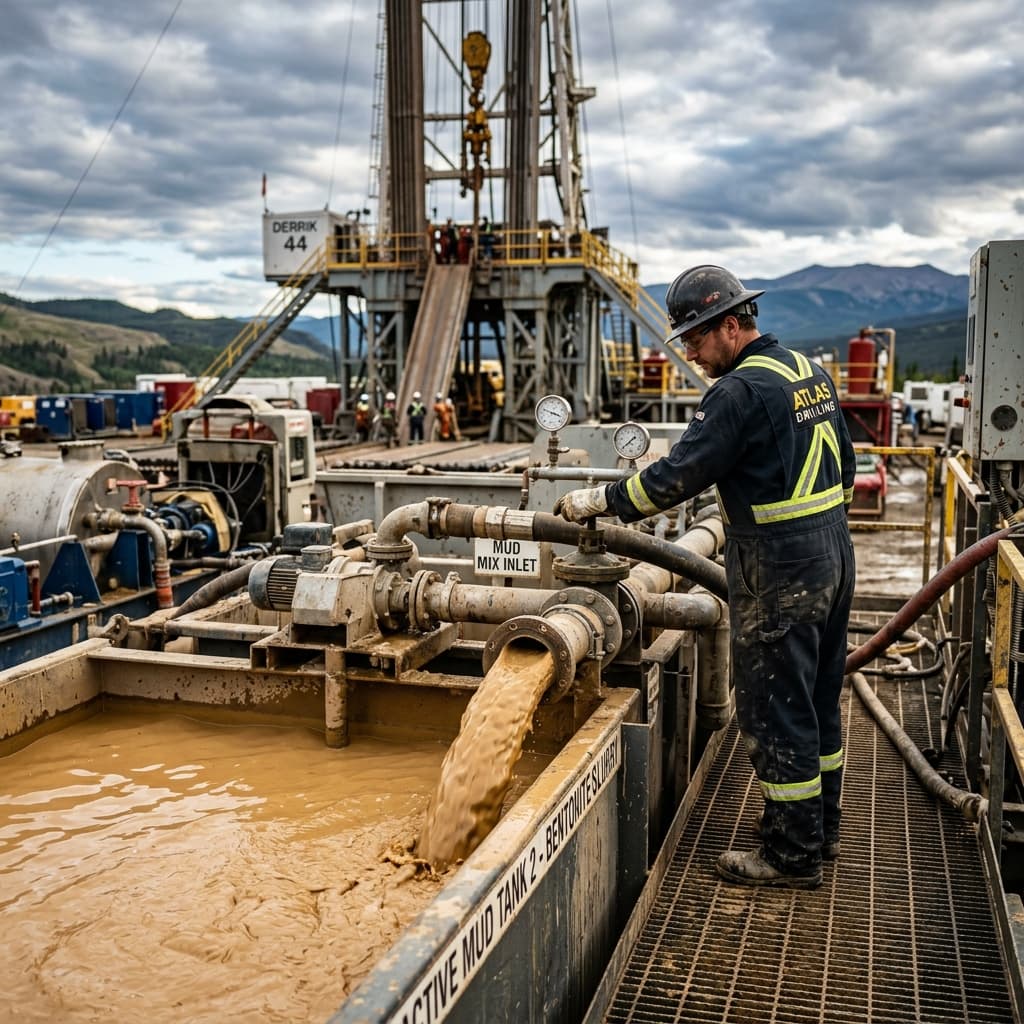
In the drilling industry, drilling fluids or "muds" are circulated through the borehole to assist in drilling operations. Sodium bentonite is a primary ingredient in these fluids due to its rheological properties:
- Lubrication & Cooling: It cools and lubricates the rotating drill bit.
- Cuttings Transport: Its high viscosity suspends rock cuttings and lifts them to the surface.
- Wall Cake Formation: The clay particles plaster the porous walls of the borehole, forming an impermeable layer (filter cake) that prevents fluid loss and blocks wellbore collapse.
- Thixotropy: The fluid behaves as a liquid when agitated (by the drill string) but gels when motion stops, preventing cuttings from sinking to the bottom of the well.
2. Foundry Sand Binder
In metal casting (foundry industry), bentonite acts as the binder holding the sand mold together.
- Green Sand Casting: A mixture of silica sand, water, and bentonite is compressed around a pattern to form the mold cavity.
- Thermal Stability: High-quality foundry grade bentonite can withstand the extreme heat of molten metal (such as iron or steel) without losing its bonding strength, ensuring clean castings with minimal defects.
3. Construction & Civil Engineering
In construction, bentonite provides excellent waterproofing and structural support:
- Diaphragm Walls & Piling: Slurry walls made with bentonite support deep excavations, preventing soil collapse before concrete is poured.
- Tunnelling & Microtunnelling: It acts as a lubricant for tunnel boring machines (TBMs) and aids in soil stabilization.
- Environmental Barriers: Bentonite sheets (Geosynthetic Clay Liners or GCLs) are used to line landfills and ponds, creating an impermeable seal that prevents contaminated leachate from polluting groundwater.
4. Iron Ore Pelletization
In steel manufacturing, fine iron ore dust must be gathered into spheres (pellets) before being fed into a blast furnace.
- Bentonite is mixed into the iron ore concentrate as a binder (typically at 0.5% to 1.0% concentration).
- It provides high wet and dry strength to the green pellets, ensuring they do not break during transportation and high-temperature baking.
Technical Specifications Comparison
| Industrial Application | Crucial Property Required | Recommended Bentonite Type | Key Test Standards |
|---|---|---|---|
| Drilling Mud | High yield point, low filtrate loss | Sodium Bentonite | API Spec 13A Section 9 / 10 |
| Metal Foundry | High green compression strength, high thermal stability | Sodium/Activated Bentonite | AFS (American Foundry Society) |
| Waterproofing | High swelling index, low permeability | High-grade Sodium Bentonite | ASTM D5890 (Swell Index) |
| Iron Ore Pelletizing | Moisture absorption, strong green/dry binder | Ultra-fine Sodium Bentonite | ISO 13500 Standards |
Why Is Industrial Bentonite So Essential?
Bentonite clay is a natural, cost-effective, non-toxic, and highly durable mineral. Its ability to undergo endless hydration and dehydration cycles without losing its core mineralogical properties ensures that it remains the material of choice for industrial, environmental, and structural engineers worldwide.
Whether it is sealing a landfill, binding iron ore, or facilitating deep-well energy exploration, bentonite is the silent stabilizer behind the scenes of global infrastructure.
Interested in sourcing high-quality bentonite? Marjaan Minerals offers customized grades tailored to your specific application requirements, ensuring adherence to strict international API and AFS standards.