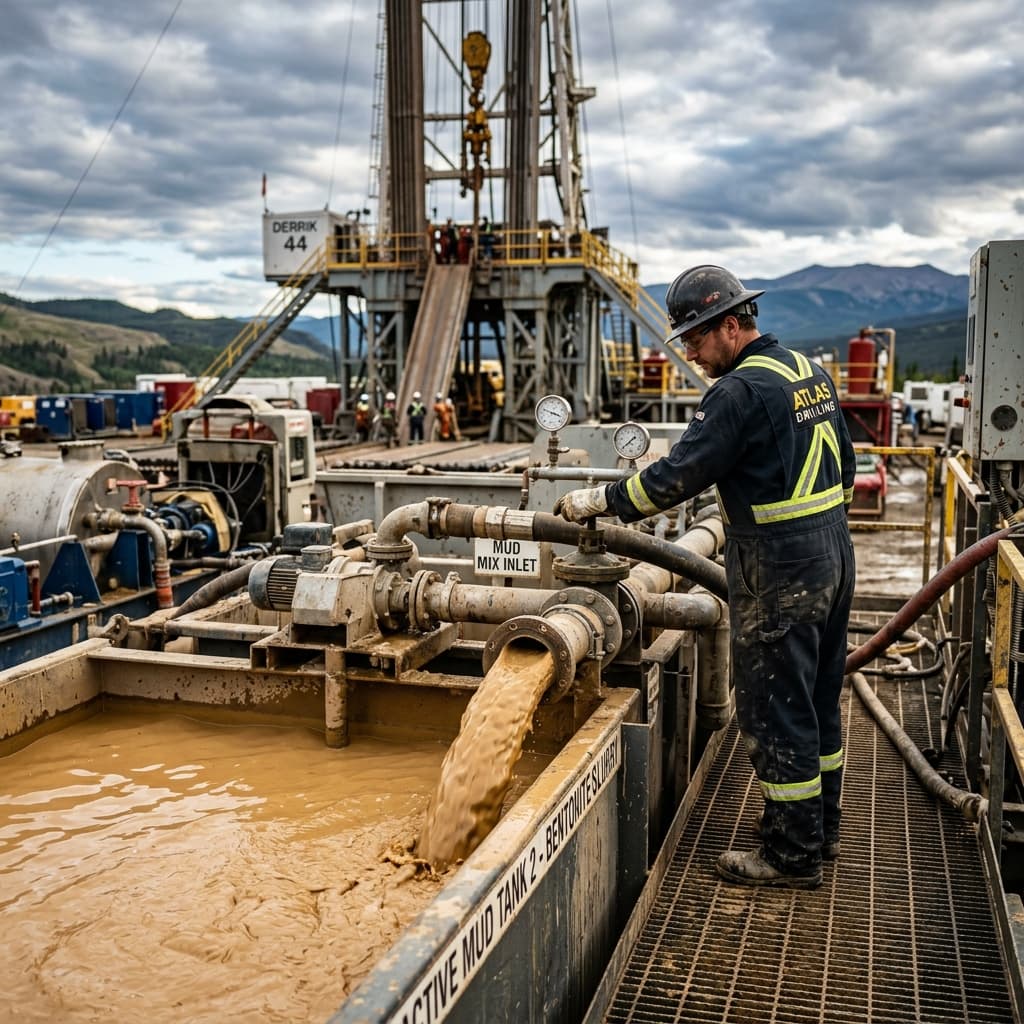
In the global drilling industry, operations are executed under high temperatures and pressures. When drilling miles deep into the Earth's crust, the performance of the drilling fluid is critical to safety and efficiency.
To ensure drilling materials can withstand these demanding conditions, the industry relies on standards set by the American Petroleum Institute (API).
API grade bentonite is the benchmark material for preparing water-based drilling muds, providing the exact rheological and filtration control needed to keep drilling sites running smoothly.
This technical guide covers the benefits of API-certified bentonite, its key applications, and its quality requirements.
What Is API Bentonite?
API bentonite is sodium bentonite clay processed and tested to comply with the American Petroleum Institute's API Spec 13A (ISO 13500) standards.
Standard commercial clays can contain impurities or fail to swell sufficiently in water. API certification guarantees that the clay meets performance targets for viscosity, thixotropy, filtration control, and purity, ensuring consistent downhole performance.
API Standards Explained
The API Spec 13A standard regulates five physical and chemical properties of the clay:
- Viscosity Profile: When mixed with water, the clay must yield a dial reading of minimum 30 at 600 rpm on a rotational viscometer, confirming its baseline carrying capacity.
- YP/PV Ratio: The ratio of Yield Point to Plastic Viscosity must be maximum 3.0, ensuring the fluid has excellent carrying capacity without becoming too thick to pump.
- Filtration Volume (Fluid Loss): Under 100 psi of pressure, fluid loss must be maximum 15.0 cm³ in 30 minutes, ensuring the clay forms a tight, impermeable filter cake to prevent wellbore collapse.
- Purity (Grit Content): Particles larger than 75 microns must be maximum 4.0% by weight, minimizing abrasive wear on mud pumps and drill strings.
- Moisture Content: Must be maximum 12.0% by weight, preventing product degradation during shipping and storage.
Oil & Gas Applications
In deep oil and gas exploration, API grade bentonite is the primary additive in water-based drilling muds:
- Cuttings Suspension: The thixotropic gel formed by the hydrated clay suspends rock cuttings when drilling stops, preventing them from falling and trapping the drill bit.
- Wellbore Stabilization: The mud's hydrostatic weight exerts outward pressure, stabilizing the well walls.
- Tool Cooling: The circulating mud cools and lubricates the drill bit, extending tool life under high thermal stresses.
HDD Applications
Horizontal Directional Drilling (HDD) is a trenchless construction method used to install pipelines, utilities, and fiber-optic cables beneath rivers, roads, and structures.
- Friction Control: HDD operations run horizontally through unconsolidated soils like sand and gravel. API-grade bentonite mud reduces friction along the horizontal drill string.
- Wall Sealing: The impermeable filter cake seals the horizontal tunnel, preventing drilling fluid from escaping (frac-outs) and securing the path for utility installation.
Quality Requirements
To ensure compliance with API Spec 13A standards, manufacturers must implement rigorous quality testing:
- Selective Mining: Only high-purity natural sodium bentonite crude is selected for processing.
- Solar Weathering: Natural sun drying reduces moisture content slowly, preserving the montmorillonite crystal lattice.
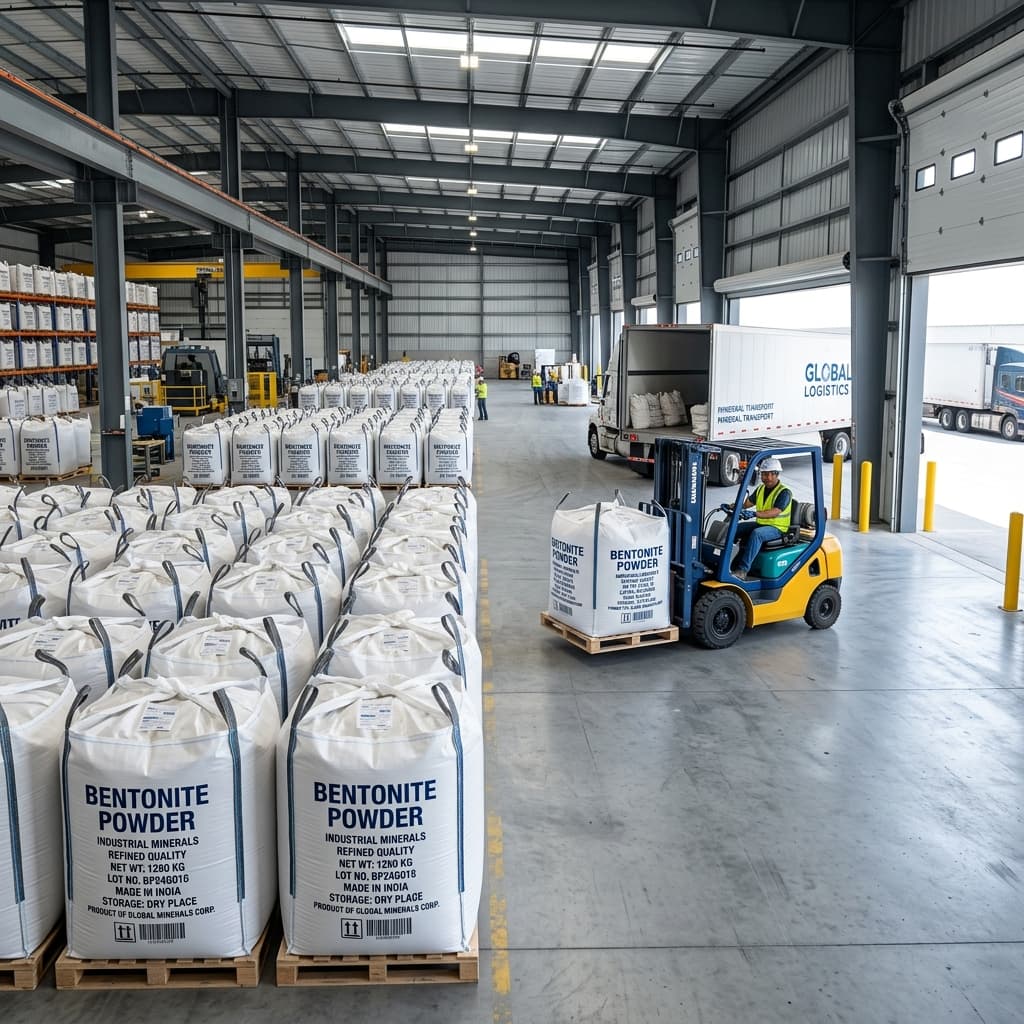
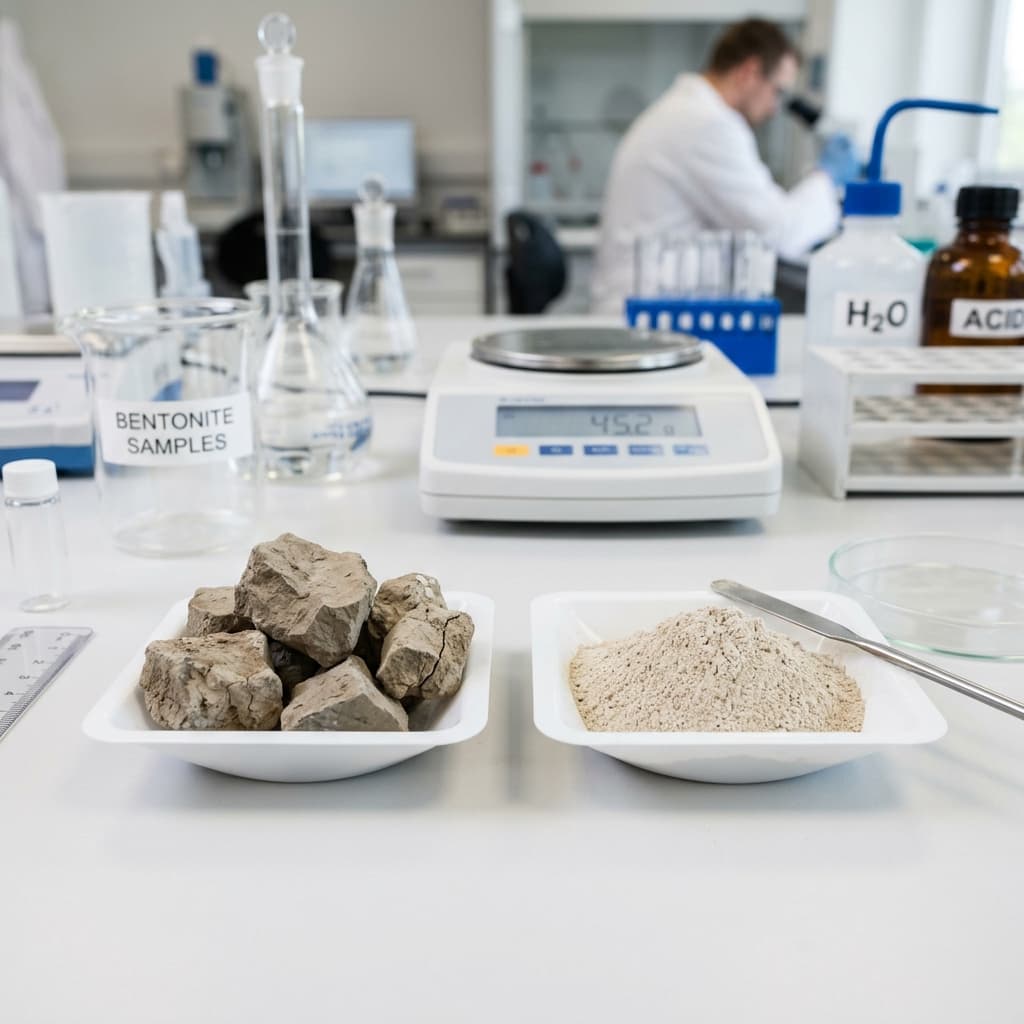
- Lab Verification: Every batch of ground clay is tested using rotational viscometers, filter presses, and wet screens to confirm compliance before packaging.
Conclusion
API grade bentonite provides the consistent viscosity, fluid loss control, and tool protection required for deep exploration and horizontal drilling.
Marjaan Minerals is a leading API bentonite supplier. We export premium API Spec 13A Section 9 and Section 10 certified bentonite processed in our modern facilities in Gujarat, India, with full laboratory quality certificates.