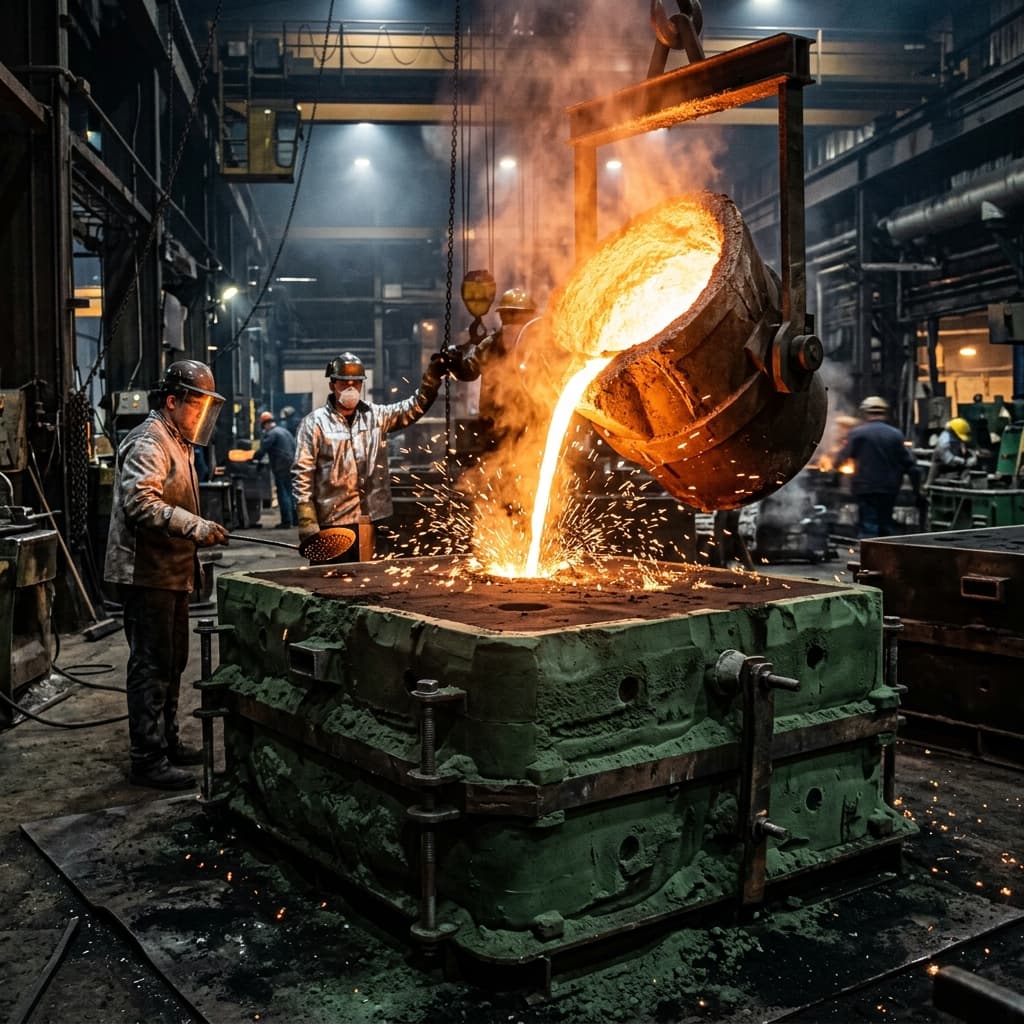
In metal casting, precision and structural integrity are paramount. Molten iron, steel, or brass poured into a mold at temperatures exceeding 1,500°C will quickly destroy weak mold materials, resulting in casting defects like swells, washes, and scabs.
For centuries, green sand casting has been the most popular method for metal casting, and its success depends entirely on the binding agent used: foundry grade bentonite.
This technical article covers how bentonite functions within green sand systems, the physical parameters that determine its quality, and the differences between sodium and calcium bentonite in casting operations.
The Green Sand System: Components and Chemistry
"Green sand" is not colored green; the term refers to the moisture content present in the mold when the metal is poured. A typical green sand mold mixture consists of:
- Silica Sand (85%–90%): Serves as the refractory bulk material that resists heat.
- Bentonite Clay (4%–10%): Serves as the binder that coats the sand grains.
- Water (2%–5%): Hydrates the clay to activate its adhesive properties.
- Carbonaceous Additives (e.g., Coal Dust, 2%–5%): Creates a gas barrier when heated, preventing metal from oxidizing and improving the surface finish of the casting.
When mixed with water, bentonite forms a highly cohesive, plastic paste that coats each sand grain. When the mixture is compacted around a pattern, the hydrated clay platelets lock the sand grains in place, creating a rigid structure that can withstand the weight of molten metal.
The thin film of hydrated bentonite clay forms a strong bridge between the silica sand grains, maintaining structural stability.
Critical Performance Metrics for Foundry Bentonite
Foundries measure several mechanical properties of bentonite to ensure consistency in casting:
1. Green Compression Strength (GCS)
This is the compressive stress required to crush a standard rammed sand specimen while the mold is still wet.
- Typical Range: 8.0 to 12.0 N/cm² (depending on clay ratio).
- Significance: High GCS ensures that the mold retains its shape during pattern extraction and handling.
2. Wet Tensile Strength (WTS)
During pouring, water is evaporated from the sand near the hot metal and condenses in a cooler zone behind the mold face, creating a high-moisture "wet condensation zone." The sand layers can separate at this interface, causing defects.
- Typical Range: 0.20 to 0.35 N/cm².
- Significance: High WTS prevents mold erosion and scabbing defects caused by steam expansion.
3. Thermal Durability (Active Clay Content)
When exposed to hot metal, bentonite loses its chemically bound water and becomes deactivated (dehydroxylated).
- Natural Sodium Bentonite has high thermal durability, meaning it can withstand multiple casting cycles before losing its binding ability.
- Calcium Bentonite deactivates at lower temperatures, requiring foundries to add fresh clay to the system more frequently.
Sodium vs. Calcium Bentonite in Foundry Applications
Both types of bentonite are used in foundries, but they yield different casting properties:
| Property | Sodium Bentonite (Natural) | Calcium Bentonite (Natural) |
|---|---|---|
| Hot Strength | Very High | Low to Moderate |
| Dry Strength | High (prevents mold cracking) | Moderate |
| Thermal Stability | High (deactivates at ~600°C to 650°C) | Low (deactivates at ~450°C to 500°C) |
| Green Strength | Moderate | High (molds feel rigid quickly) |
| Casting Finish | Smooth, with minimal defects | Good, but more prone to thermal defects |
Due to its high thermal stability and dry strength, natural sodium bentonite is preferred for casting heavy steel and iron components. Calcium bentonite is often preferred for casting non-ferrous metals (like aluminum or bronze) or lighter iron parts, where temperatures are lower and fast mold production is required.
Sourcing Premium Foundry Bentonite
Using low-quality bentonite with high impurities (such as quartz or gypsum) can lower the sintering point of the green sand, causing the sand to fuse to the metal surface.
At Marjaan Minerals, we produce high-grade natural sodium and chemically activated bentonite for foundries. Our products are processed to ensure high thermal durability, excellent green compression strength, and minimal impurities, helping you reduce casting defects.