
In geotechnical engineering and deep-well exploration, the success of a drilling project depends on the performance of the drilling fluid system.
Water-based drilling muds must carry rock cuttings, manage downhole pressures, and seal porous geological formations.
To achieve these goals, drilling companies rely on sodium bentonite for drilling, a highly expanding clay mineral that provides essential rheological properties.
This technical guide covers the benefits of sodium bentonite in drilling mud systems and explains why it is the standard for borehole stability.
Understanding Sodium Bentonite
Sodium bentonite is a naturally occurring clay mineral composed primarily of montmorillonite.
What distinguishes sodium bentonite from other clays is the dominance of sodium (Na⁺) ions in its interlayer spaces. Because sodium has a weak electrostatic hold on the surrounding clay sheets, water molecules can easily penetrate the crystalline layers.
When exposed to water, sodium bentonite can expand up to 15 to 20 times its dry volume. This high swelling capability makes it highly effective at increasing fluid viscosity and forming thixotropic gels.
Why Drilling Companies Use Bentonite
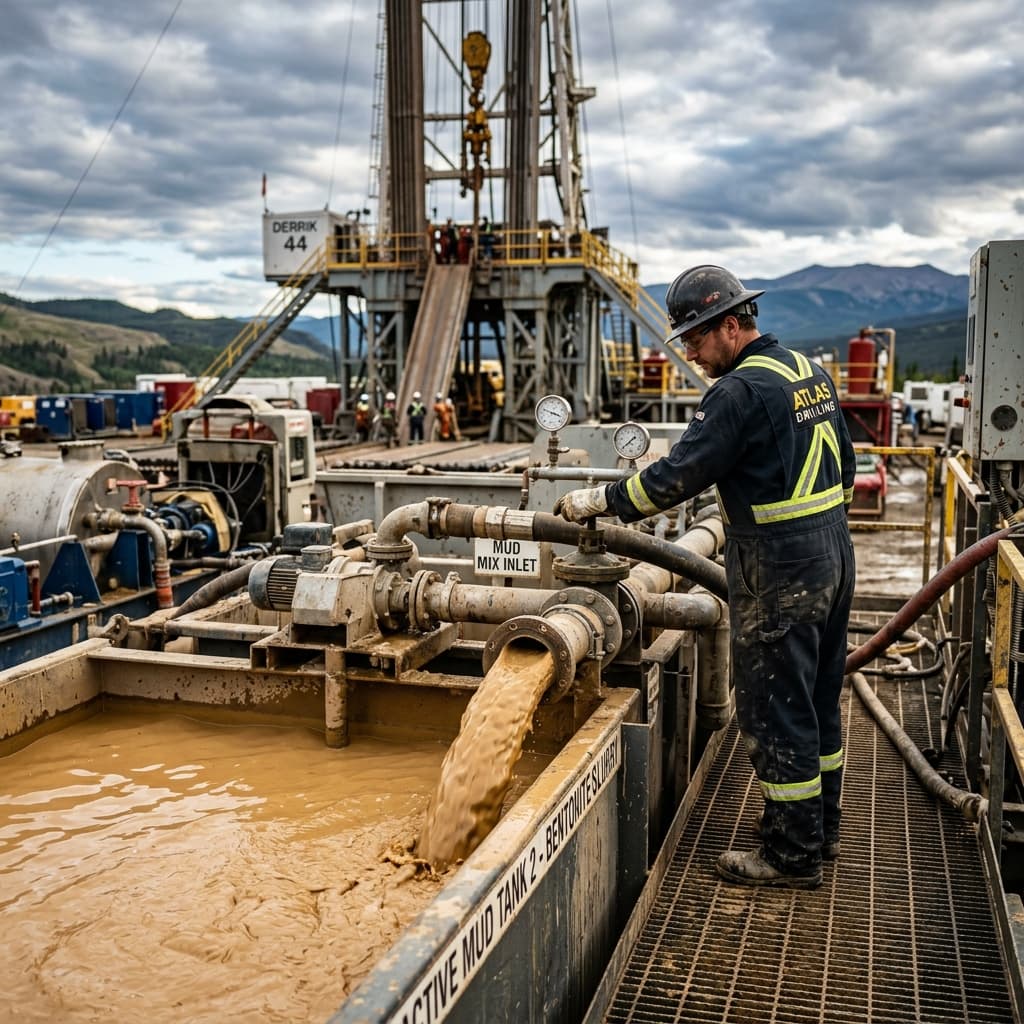
During drilling operations, a mud slurry is pumped down the inside of the drill pipe, exits through the drill bit nozzles, and returns to the surface through the annular space between the drill pipe and the wellbore wall.
Using untreated water is ineffective because it cannot suspend cuttings, leading to pipe binding and hole collapse.
Adding drilling-grade bentonite converts water into a high-performance fluid capable of managing extreme downhole conditions.
Viscosity Enhancement
One of the primary functions of drilling mud is to transport excavated rock cuttings out of the borehole.
Sodium bentonite increases the viscosity of water, giving the fluid the carrying capacity needed to lift rock debris to the surface.
- Thixotropy: Bentonite muds are thixotropic, meaning they behave as a liquid under shear stress (when pumped or agitated by the rotating drill string) but transition into a rigid gel when flow stops.
- Gel Strength: When the mud pumps are turned off (such as during pipe additions), the bentonite mud gels quickly. This suspends the rock cuttings in place and prevents them from falling to the bottom of the well, where they could pack around and trap the drill bit.
Borehole Stability
As the drill bit cuts through unstable formations like clay, sand, or gravel, the borehole walls are vulnerable to cave-ins.
The hydrostatic pressure of a heavy bentonite mud column pushes outward against the wellbore walls, counteracting tectonic soil pressures and groundwater intrusion. This mechanical stabilization prevents wellbore collapse and maintains borehole integrity.
Filtration Control
When drilling through porous formations (such as sandstones), water from the drilling fluid can escape into the surrounding rock, leaving thick clay solids inside the well. This fluid loss can degrade the mud and destabilize the borehole.
- Filter Cake Formation: The flat clay plates in sodium bentonite align against the porous rock faces, layering over each other to form a thin, tough, and impermeable layer called a filter cake.
- Fluid Containment: This filter cake prevents water loss into the surrounding rock, stabilizes the well wall, and prevents differential sticking of the drill string.
Environmental Benefits
Sodium bentonite is a naturally occurring, non-toxic mineral, making it an environmentally safe additive for water-based drilling muds.
Unlike oil-based muds or synthetic polymer fluids, bentonite muds present minimal risk to local groundwater aquifers and soil ecosystems. This makes them ideal for drilling drinking water wells and conducting civil engineering projects in sensitive environmental zones.
Conclusion
From deep oil exploration to geotechnical piling, sodium bentonite provides the viscosity, borehole stability, and filtration control required for modern drilling.
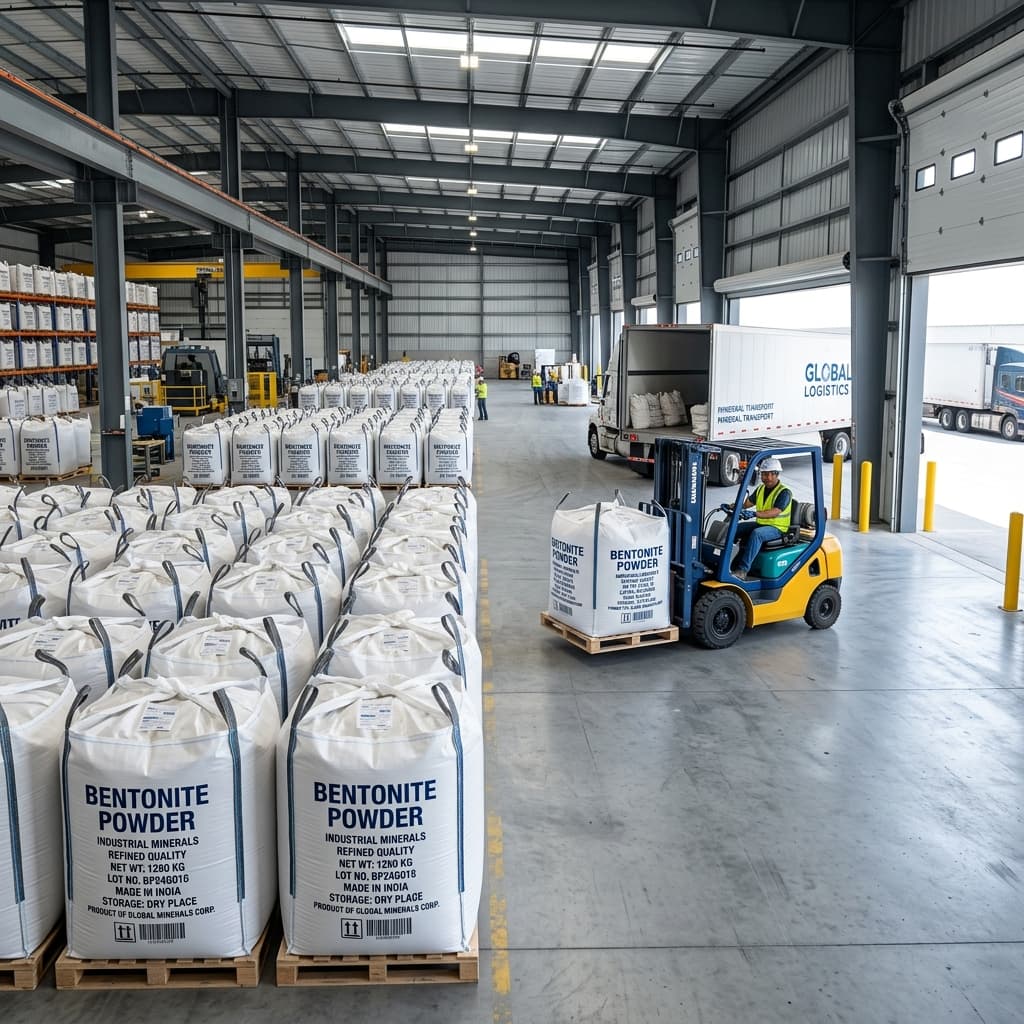
Marjaan Minerals supplies premium natural sodium bentonite certified to international standards, ensuring consistent rheology and excellent filtration control for global drilling projects.